
The TIMKEN Bearing Identification Guide is an essential reference for engineers, procurement specialists, and maintenance professionals who work with precision bearing systems. Whether you are replacing a worn component or sourcing parts for a new industrial application, understanding how to correctly identify a TIMKEN bearing can save significant time, reduce costly errors, and ensure optimal machine performance. This guide provides a comprehensive breakdown of TIMKEN’s numbering systems, physical markings, and key identification methods used across their extensive product catalog.
Why Proper Bearing Identification Matters In Industrial Applications
In high-performance industrial environments, selecting the wrong bearing can lead to premature failure, unexpected downtime, and even safety hazards. The TIMKEN Bearing Identification Guide addresses this challenge by offering a structured approach to reading and interpreting the complex alphanumeric codes stamped on each bearing. TIMKEN, one of the world’s leading manufacturers of tapered roller bearings and other precision components, uses a systematic coding convention that encodes critical data — including bore size, series designation, internal clearance, and special modifications — directly into the part number. Understanding this system is not just useful; it is a fundamental skill for anyone managing rotating equipment.
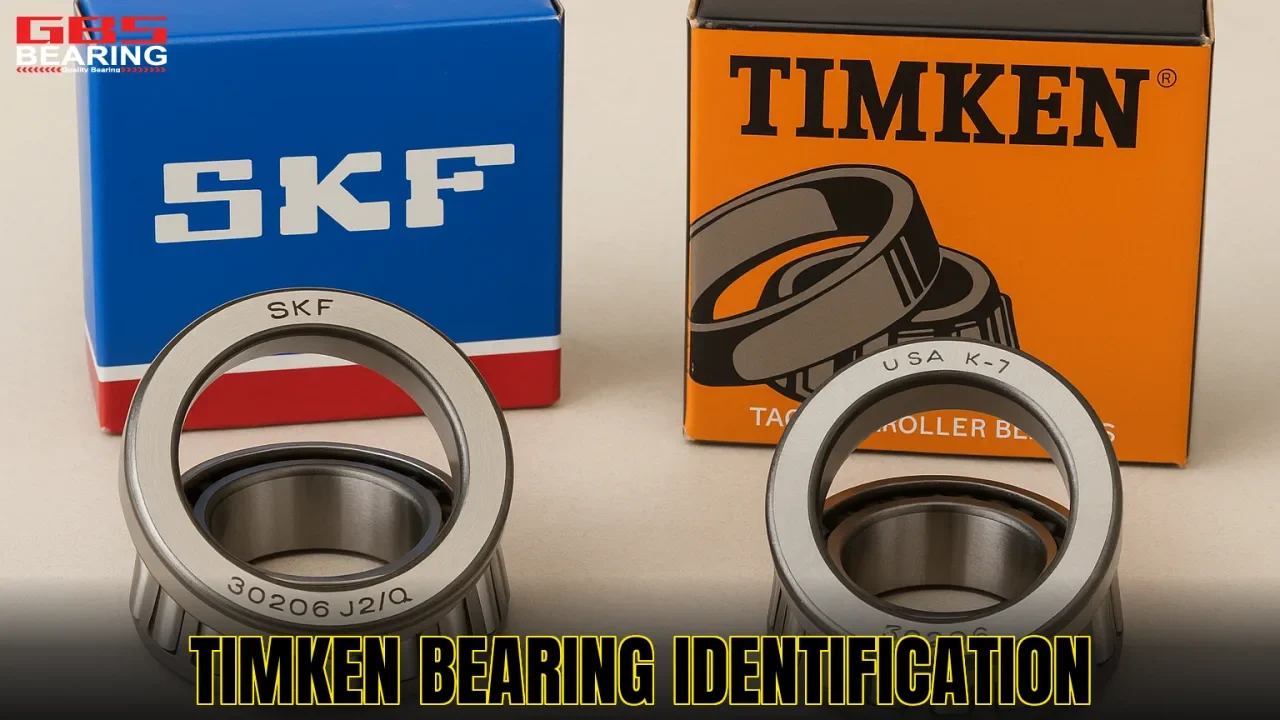
Beyond part numbers, correct identification involves recognizing physical characteristics such as cage design, ring geometry, and surface finish. These visual cues, combined with the alphanumeric markings, form the backbone of any reliable TIMKEN Bearing Identification Guide process. Misidentification is surprisingly common, especially when bearings are sourced from multiple suppliers or when legacy equipment lacks proper documentation. Establishing a consistent identification protocol reduces the risk of cross-contamination between incompatible components and supports more accurate inventory management across facilities.
TIMKEN Bearing Identification Guide: Decoding The Part Number System
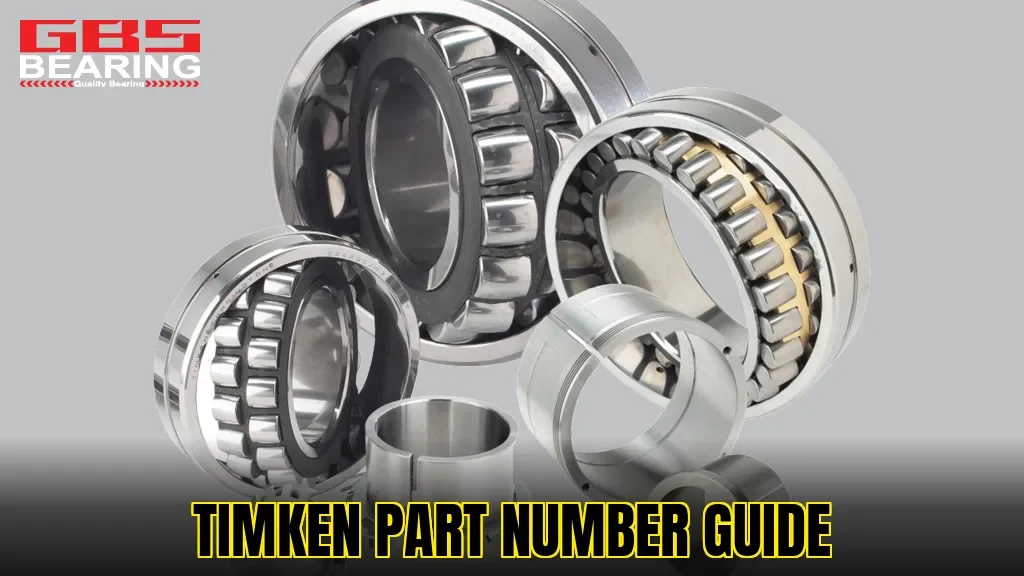
The TIMKEN part numbering system is structured to convey maximum information in a compact format. Once you understand the logic behind each segment of the code, the TIMKEN Bearing Identification Guide becomes a powerful diagnostic tool. The numbering convention generally follows a prefix-base-suffix structure, where each section communicates a specific attribute of the bearing. This approach is consistent across most of TIMKEN’s product lines, including their tapered roller, cylindrical roller, and spherical roller bearing families.
Understanding Prefixes And Base Numbers
The prefix section of a TIMKEN part number typically indicates the bearing series or product family. For example, letters such as “L,” “M,” or “HM” at the beginning of a number are common designators for specific tapered roller bearing series. The base number that follows identifies the bore diameter and overall dimensional envelope of the bearing. In the TIMKEN Bearing Identification Guide, the base number is arguably the most critical element — it ties the component directly to standardized dimensional tables that define interchangeability with other manufacturers’ equivalents. Engineers should always cross-reference the base number against TIMKEN’s official dimension tables to confirm compatibility before installation.
Reading Suffixes For Special Features And Modifications
Suffixes appended to the base number communicate important engineering details that affect performance and application suitability. Common suffixes in the TIMKEN Bearing Identification Guide include designators for internal clearance class (such as C3 or C4 for greater-than-normal radial clearance), cage material modifications (for example, “W” for a welded cage or “P” for a pressed steel cage), and lubrication specifications. Some suffixes indicate that the bearing has been manufactured to tighter tolerances, which is critical for high-speed or precision spindle applications. Ignoring suffix information is a frequent source of errors during replacement, as two bearings with identical base numbers but different suffixes may behave very differently under load.
TIMKEN Bearing Identification Guide For Tapered Roller Bearing Assemblies
Tapered roller bearings are TIMKEN’s flagship product, and their identification follows a slightly more complex convention because they often consist of separately cataloged cup and cone components. The TIMKEN Bearing Identification Guide for tapered roller bearings requires users to identify both the cup (outer ring) and cone (inner ring assembly) individually, each carrying its own part number. These components are designed to be matched based on their contact angle and dimensional specifications. In many industrial applications, the cup and cone are replaced as a matched set to ensure proper load distribution and bearing life. TIMKEN provides pairing charts and assembly guides to support this process.
Physical Markings, Inspection Methods, And Common Identification Challenges
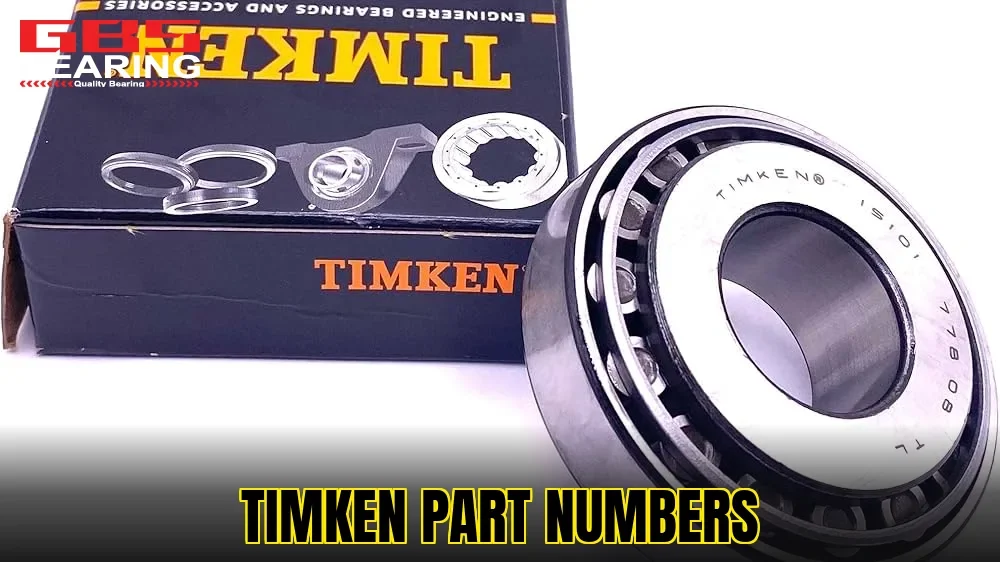
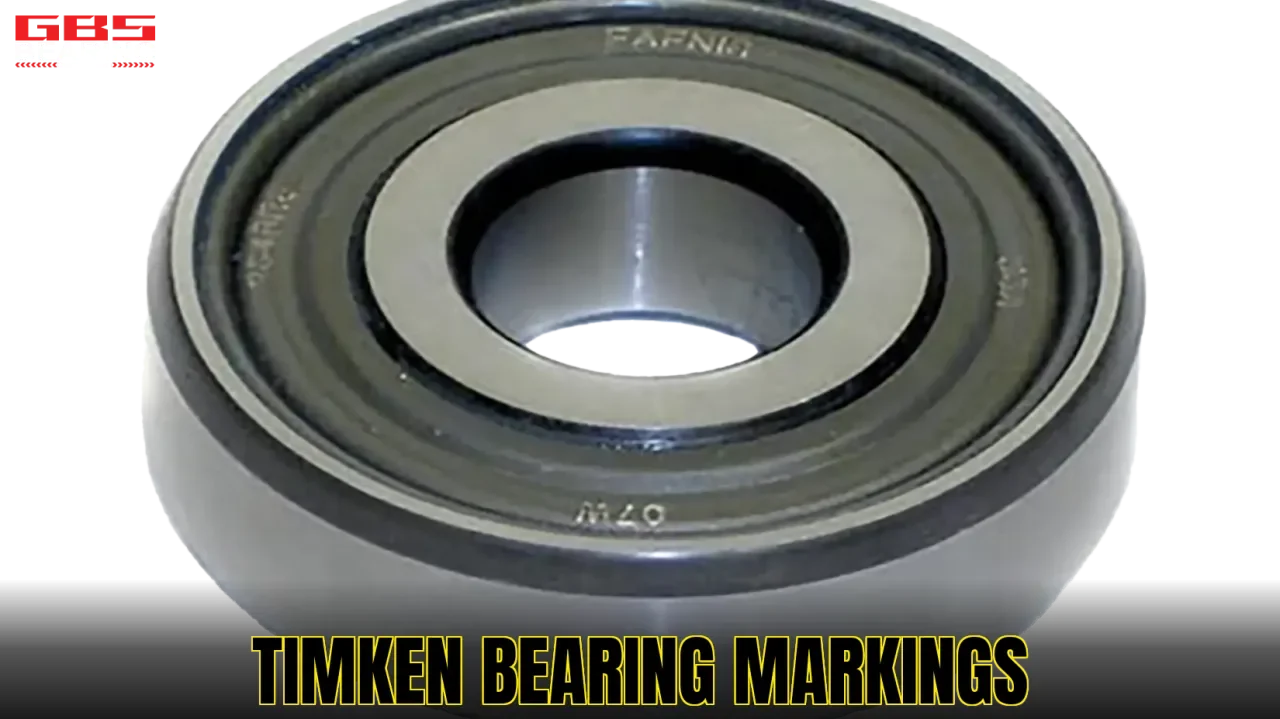
Beyond the numerical coding system, the TIMKEN Bearing Identification Guide also covers the physical inspection of bearings to confirm identity and assess condition. TIMKEN bearings are typically marked with the brand name, part number, and country of manufacture directly on the bearing ring. These markings are laser-etched or stamped and should be clearly legible on genuine products. When markings are worn, damaged, or absent — as is often the case with used bearings — technicians must rely on dimensional measurement and comparison against TIMKEN’s published engineering data.
| Identification Parameter | Description | Tools Required |
|---|---|---|
| Bore Diameter (d) | Inner ring bore size in millimeters or inches | Bore gauge, micrometer |
| Outer Diameter (D) | Outer ring external diameter | Outside micrometer, caliper |
| Width / Height (B or T) | Axial dimension of the bearing assembly | Digital caliper |
| Contact Angle (α) | Angle of load line relative to radial plane | Engineering reference tables |
| Cage Material & Design | Steel, brass, or polymer; pressed, machined, or welded | Visual inspection |
| Part Number Markings | Alphanumeric code stamped or etched on ring | Magnification, UV light |
One of the most persistent challenges in bearing identification is distinguishing genuine TIMKEN products from counterfeit or substandard alternatives. The TIMKEN Bearing Identification Guide recommends several authentication practices, including verifying packaging integrity, checking for TIMKEN’s holographic security labels on premium product lines, and sourcing exclusively from authorized distributors. Counterfeit bearings may carry convincing markings but lack the metallurgical precision and geometric accuracy of genuine TIMKEN components. The consequences of installing a counterfeit bearing in a critical application can be severe, including accelerated wear, unexpected failure, and potential equipment damage.
Conclusion
Mastering the TIMKEN Bearing Identification Guide is a valuable investment for any professional responsible for maintaining or specifying precision bearing systems. By understanding the part numbering structure, reading physical markings accurately, and applying proper dimensional inspection techniques, you can ensure that every bearing selected is the correct match for its intended application. This reduces downtime, extends equipment life, and supports more efficient maintenance operations. If you are looking for expert support and a reliable source for genuine TIMKEN products, partnering with a trusted Bearing Supplier ensures you have access to the technical knowledge and authentic components your operations demand.
Xem thêm: TIMKEN 110RJ03 Bearing: Technical Specifications And Buying Guide