
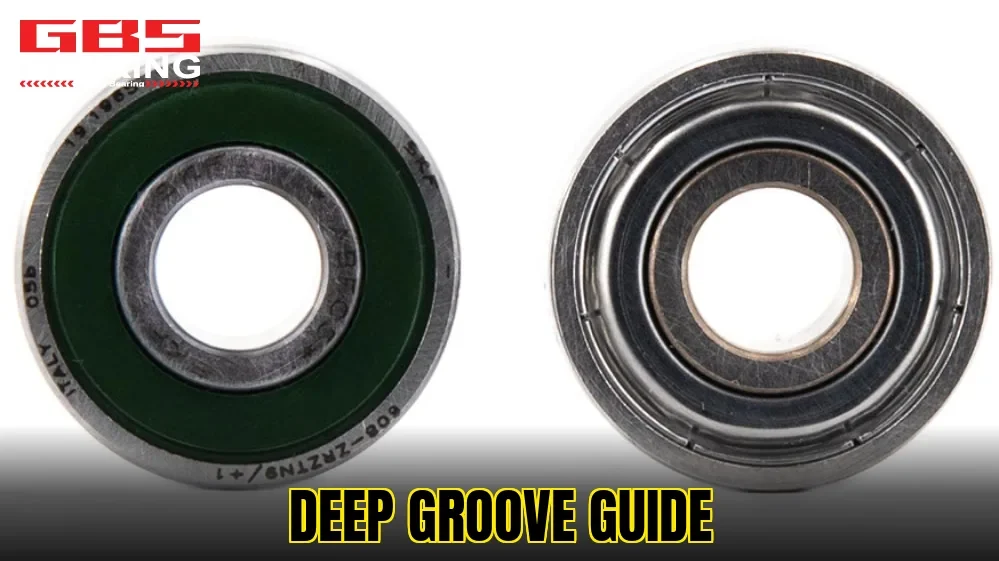
When it comes to reliable rotary motion solutions, SKF Deep Groove Ball Bearings stand out as one of the most versatile and widely used bearing types across global industries. From electric motors and gearboxes to agricultural machinery and automotive systems, these bearings deliver consistent performance under both radial and axial loads. This guide explores everything engineers, procurement specialists, and maintenance professionals need to know — from internal geometry and load ratings to series selection and real-world application best practices — helping you make smarter, more cost-effective decisions for your equipment.
What Makes SKF Deep Groove Ball Bearings The Industry Standard
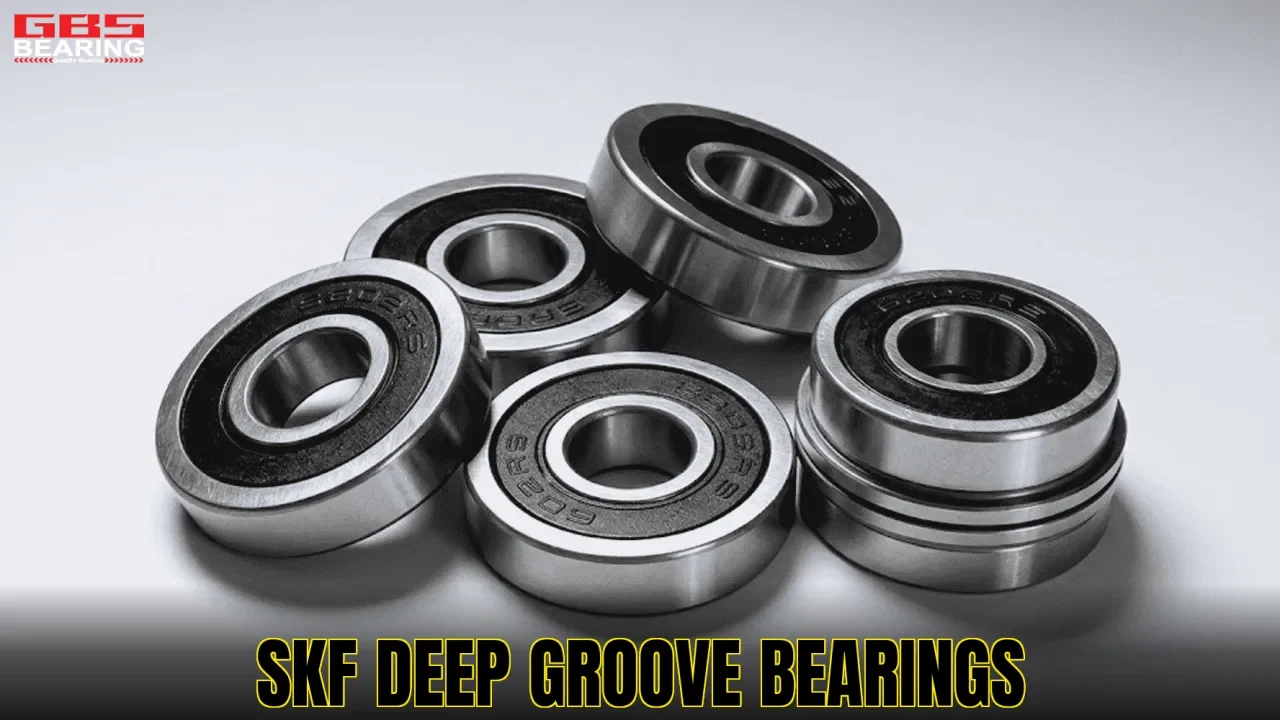
SKF has been engineering precision bearings for over a century, and its deep groove ball bearing lineup reflects decades of accumulated expertise in tribology, materials science, and manufacturing precision. The design principle behind SKF Deep Groove Ball Bearings is deceptively simple: a set of balls running between two raceways with deep, continuous grooves that allow the bearing to handle not just radial loads, but also moderate axial forces in both directions simultaneously. This multi-directional load capacity is what separates deep groove designs from other ball bearing configurations.
Core Design Geometry And Internal Clearance
The geometry of SKF Deep Groove Ball Bearings is defined by the relationship between the ball diameter, raceway curvature, and contact angle. SKF engineers these dimensions to precise tolerances, ensuring optimal load distribution and minimal stress concentrations on the raceway surface. Internal clearance — classified as C2, CN (Normal), C3, C4, or C5 — determines how much free movement exists between the rolling elements and raceways before the bearing is installed and loaded. Selecting the correct clearance class is critical because operating temperature, shaft fit, and housing fit all affect the final working clearance in service. For high-speed applications, C3 clearance is commonly recommended to accommodate thermal expansion without inducing excessive preload.
Material Composition SKF Deep Groove Ball Bearings
SKF manufactures its deep groove ball bearings primarily from through-hardened bearing steel, typically 52100 chromium steel (100Cr6), which offers an excellent balance of hardness, toughness, and fatigue resistance. For demanding environments involving elevated temperatures, corrosive media, or food-grade requirements, SKF also offers variants in stainless steel (AISI 440C) and ceramics such as silicon nitride balls. Heat treatment processes — including hardening and tempering to achieve surface hardness values between 58 and 65 HRC — are tightly controlled to ensure dimensional stability and long service life. These material choices directly influence the L10 fatigue life calculations that engineers rely on during the design phase.
Sealing And Shielding Options For Extended Service Life
One of the most practical advantages of SKF Deep Groove Ball Bearings is the wide range of sealing and shielding configurations available. Open bearings (suffix: no designation) are suitable for clean environments where external lubrication can be applied. Single or double metal shields (suffix Z or ZZ) provide protection against coarse contamination while minimizing friction. Rubber contact seals (suffix RS or 2RS) offer superior exclusion of fine particles and moisture, making them ideal for agricultural, food processing, and outdoor applications. SKF’s RSL and RSH seal variants are specifically engineered to reduce friction torque compared to conventional contact seals, which is particularly beneficial in high-speed or energy-sensitive applications.
SKF Deep Groove Ball Bearings Series Overview And Technical Specifications
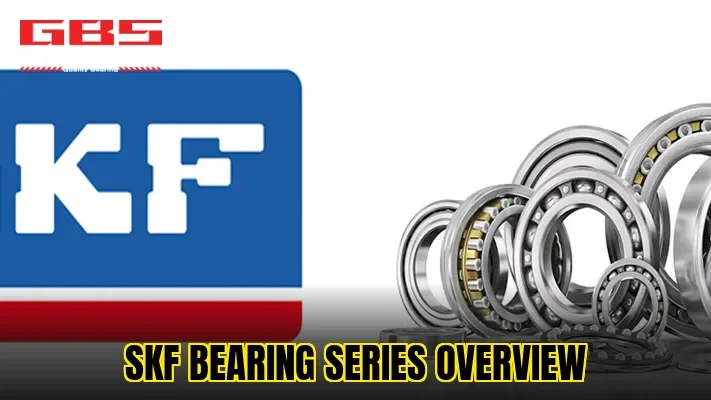
SKF organizes its deep groove ball bearing portfolio into several dimensional series, each defined by the ISO boundary dimensions system. Understanding which series suits your application requires matching bore diameter, outer diameter, width, and load ratings to your specific operating conditions. Below is a reference table covering the most commonly specified series.
| Series | Dimension Series | Bore Range (mm) | Typical Application | Key Feature |
|---|---|---|---|---|
| 6000 | Extra Light (10) | 10 – 150 | Electric motors, instruments | Minimal weight, high speed |
| 6200 | Light (02) | 10 – 150 | Pumps, fans, conveyors | Balanced load/speed ratio |
| 6300 | Medium (03) | 10 – 150 | Gearboxes, compressors | Higher radial load capacity |
| 6400 | Heavy (04) | 10 – 100 | Heavy industrial equipment | Maximum radial load rating |
| 6800 | Extra Thin Section | 10 – 100 | Robotics, medical devices | Compact profile, low mass |
| 6900 | Thin Section | 10 – 100 | Precision instruments | Space-saving design |
Load Ratings, Speed Limits, And Fatigue Life Calculations
Every SKF Deep Groove Ball Bearing carries two fundamental load ratings: the basic dynamic load rating (C) and the basic static load rating (C0). The dynamic rating is used in conjunction with the bearing’s equivalent dynamic load (P) to calculate the L10 basic rating life in millions of revolutions using the formula L10 = (C/P)³. SKF’s enhanced life calculation model also incorporates the a-SKF life modification factor, which accounts for lubrication conditions, contamination level, and material fatigue limit — providing a far more realistic service life prediction than the classical ISO 281 method alone. Engineers should always consult SKF’s bearing calculation tools or technical documentation to validate life predictions before finalizing a bearing selection.
Speed Ratings And Thermal Considerations
SKF Deep Groove Ball Bearings are rated for two speed limits: the reference speed and the limiting speed. The reference speed defines the maximum speed at which the bearing can operate continuously under a specific thermal reference condition, while the limiting speed represents the absolute mechanical ceiling dictated by cage design and centrifugal forces. Operating above the reference speed is possible with enhanced lubrication, but requires careful thermal management. For grease-lubricated bearings, operating temperature should ideally remain between -30°C and +120°C, though high-temperature grease variants extend this range. Proper lubrication quantity is equally critical — over-greasing generates excessive churning heat that can shorten bearing life as severely as under-greasing.
Selecting And Mounting SKF Deep Groove Ball Bearings Correctly
Even the highest quality bearing will underperform or fail prematurely if incorrectly selected, mounted, or maintained. The selection process for SKF Deep Groove Ball Bearings should follow a structured engineering workflow that begins with a thorough analysis of operating conditions and ends with a validated bearing designation and mounting specification. Skipping any step in this process introduces unnecessary risk into the final design.
Fit Selection For Shaft And Housing
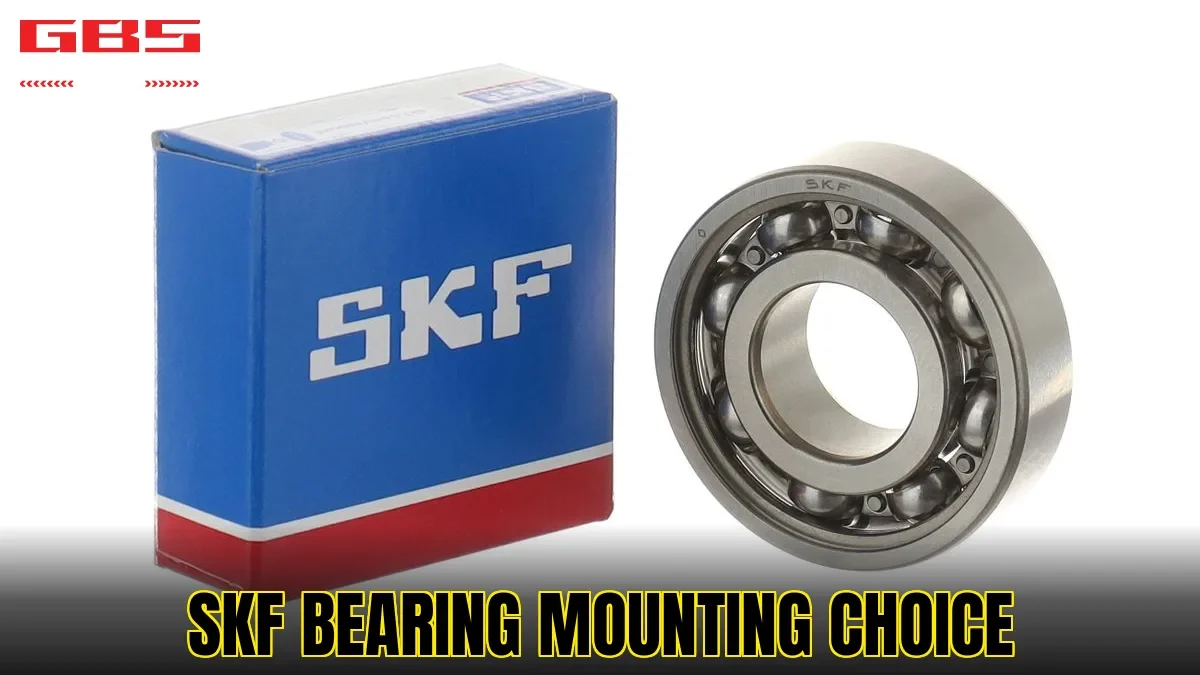
Interference and clearance fits between the bearing ring and its mating components are among the most consequential decisions in bearing installation. For rotating inner rings — the most common configuration — a light interference fit (k5 or m5 on the shaft) prevents ring creep under load, which would otherwise cause fretting corrosion and premature failure. The outer ring, typically stationary in a housing, is usually installed with a transitional or slight clearance fit (H7 or J7) to allow for thermal expansion and facilitate removal during maintenance. SKF provides detailed fit recommendation tables in its technical documentation, and these should be followed precisely rather than relying on generic engineering judgment. Incorrect fits are responsible for a significant proportion of early bearing failures in the field.
Mounting Methods And Tools For SKF Deep Groove Ball Bearings
Proper mounting of SKF Deep Groove Ball Bearings requires applying mounting force exclusively through the ring being press-fitted — never through the rolling elements. Mechanical mounting using a bearing fitting tool kit is suitable for smaller bearings, while thermal mounting methods (using induction heaters to expand the inner ring) are preferred for larger interference-fit installations. SKF’s TMBH series bearing heaters are specifically designed to heat bearings uniformly to 80–90°C above ambient without exceeding the 125°C threshold that can alter the steel’s metallurgical properties. After mounting, the bearing should be allowed to cool and contract onto the shaft before the machine is returned to service. Documenting mounting procedures and torque values ensures repeatable quality across maintenance cycles.
Lubrication Strategy And Relubrication Intervals
Lubrication is the single most important factor determining the operational life of SKF Deep Groove Ball Bearings in service. Grease lubrication is the standard choice for the majority of applications, with the initial fill quantity typically set at 30–50% of the free bearing space to balance adequate film formation against churning losses. SKF LGHP 2, LGMT 3, and LGEP 2 are among the most widely specified greases for deep groove ball bearing applications, each formulated for distinct temperature ranges and load conditions.
Conclusion
Throughout this guide, we have examined why SKF Deep Groove Ball Bearings remain the benchmark for precision, versatility, and reliability in mechanical engineering applications worldwide. Whether you are designing a new system or maintaining existing equipment, partnering with a knowledgeable Bearing Supplier ensures you receive not just the correct bearing designation, but also the technical support needed to optimize your entire bearing application from installation through end-of-life management.
Xem thêm: SKF NX25 Bearing