
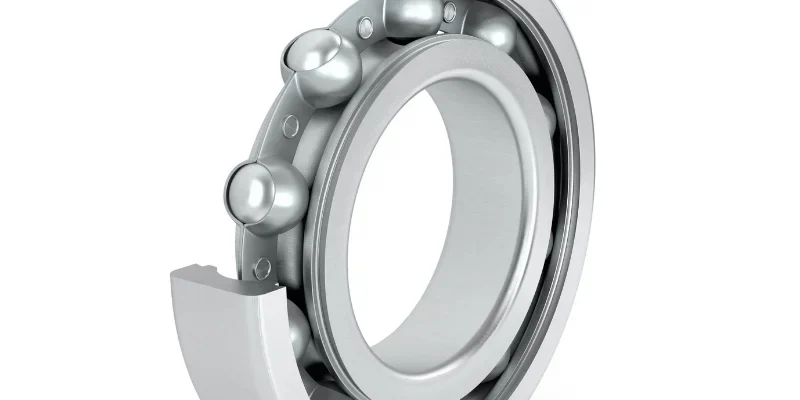
SKF bearing size chart helps readers look up and understand bearing dimension specifications such as inner diameter d, outer diameter D, and width B. GBS Bearing focuses on explaining the relationship between series, bore codes, and actual dimensions, while also guiding users on how to compare charts according to bearing types to minimize incorrect code selection when choosing replacement products.
SKF bearing size chart with GBS Bearing
SKF bearing size chart provides a way to look up bearing dimensions through specifications such as inner diameter, outer diameter, and width. GBS Bearing uses this information to describe product configurations and support the identification of suitable bearing codes.
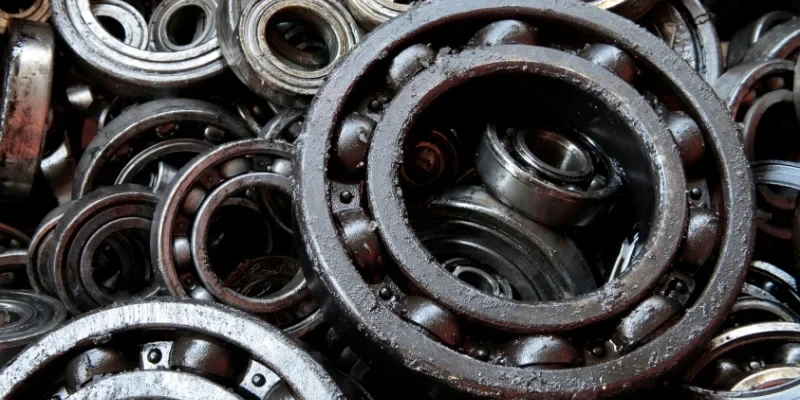
What dimensions do d, D, and B represent
In SKF bearing size chart, the three specifications d, D, and B are basic values used to determine the geometric dimensions of a bearing. The symbol d represents the inner bore diameter, D represents the outer diameter of the bearing, and B indicates the bearing width.
These specifications are commonly used when selecting replacement bearings for machinery. For example, two bearings with the same bore diameter but different outer diameters or widths may not fit the same installation position. Therefore, reading the complete d, D, and B values helps determine the correct product configuration.
How do bore codes 00–03 correspond to 10–17 mm
In SKF bearing size chart, small bore code groups from 00 to 03 use a specific conversion method to represent inner bore diameters. These codes are commonly found in smaller bearing series.
| Bore code | Nominal bore diameter | Application examples |
| 00 | 10 mm | Small equipment |
| 01 | 12 mm | Light mechanical assemblies |
| 02 | 15 mm | Small machinery |
| 03 | 17 mm | Drive mechanisms |
These codes allow users to quickly identify bore dimensions without requiring the actual number to be directly written on each product.
How do dimension series distinguish bearing sizes
SKF bearing size chart uses dimension series to distinguish differences in the relationship between bore diameter, outer diameter, and width. Different series create bearing groups with their own load capacities and overall dimensions.
For example, with the same bore diameter, a bearing from a light series will have smaller dimensions compared with a medium or heavy series. This classification helps designers select products that match installation space and load requirements.
Analyzing bore codes and dimension series
SKF bearing size chart helps explain the relationship between bearing codes, bore codes, and dimension series. These symbols form an identification system that distinguishes bearing types with different constructions.
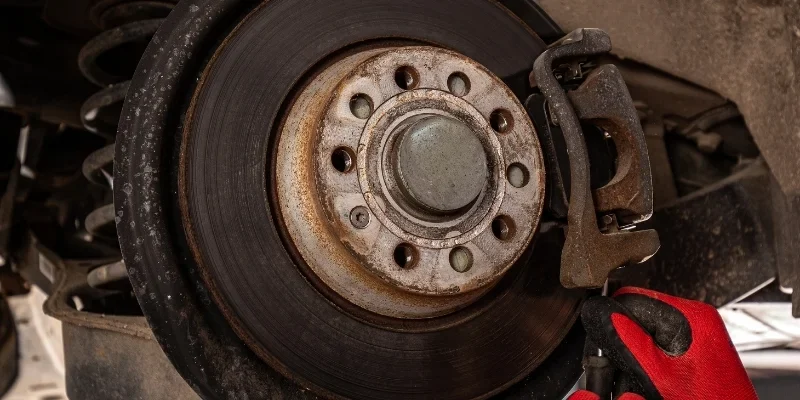
How to determine bore diameter from code 04
In SKF bearing size chart, bore codes from 04 and above are commonly converted using the rule of multiplying the code number by 5 to determine the bore diameter in millimeters. This is a common method in standard bearing coding systems.
For example, a bearing with bore code 04 corresponds to a 20 mm bore diameter, code 05 corresponds to 25 mm, and the size continues increasing according to this rule. This method helps users quickly identify basic dimensions by looking only at the product code.
How are special bore sizes directly indicated
In SKF bearing size chart, bearings with special bore diameters usually do not follow the standard bore code conversion rule. Instead, the dimension may be directly stated in the product code or technical documentation.
This group often includes bearings with very small or very large bores that require separate identification methods. Direct size indication helps prevent confusion when selecting between multiple product lines with similar designs.
How can bearings with the same bore diameter have different dimensions
SKF bearing size chart shows that bearings with the same bore diameter can still have different overall dimensions. These differences usually come from the series, outer ring design, and product width.
For example, two bearings with the same 25 mm inner bore may differ because one type is more compact, while another provides higher load capacity due to larger dimensions.
| Factor | Meaning |
| Bore diameter | Installed shaft size |
| Outer diameter | Housing size |
| Width | Installation space |
| Series | Load capacity |
How to compare dimensions before replacement
Using SKF bearing size chart before replacing a bearing helps determine the correct product dimensions and configuration. GBS Bearing focuses on information such as basic dimensions, identification codes, and technical characteristics to support the identification process.

Measure d, D, and B when the bearing code is unclear
When bearing markings become faded or incomplete, SKF bearing size chart can be combined with actual measurement methods. The three dimensions that need to be identified include inner diameter d, outer diameter D, and width B.
These measurements provide a basis for comparison with corresponding bearing catalogues. When the product code is unavailable, physical dimensions are usually the first information used to narrow down possible selections.
Check suffixes before selecting bearings with the same dimensions
In SKF bearing size chart, basic dimensions do not represent all bearing characteristics. Suffixes such as C3, 2RS, or ZZ may indicate clearance, seal types, or other technical configurations.
Two bearings with the same d, D, and B dimensions but different suffixes may be designed for different operating conditions. Therefore, reading the complete product code helps identify the correct replacement version.
Avoid replacing bearings based only on bore diameter
SKF bearing size chart shows that bore diameter is only one part of the bearing dimension information system. Selecting a bearing only based on shaft size may overlook differences in outer diameter, width, or design.
GBS Bearing supports bearing code identification by combining multiple factors such as dimensions, series, and technical suffixes. This approach provides a more complete understanding of product configuration before replacement.
Conclusion
SKF bearing size chart should be used by comparing bearing codes, inner diameter, outer diameter, width, and dimension series simultaneously. By checking both nominal specifications and related suffixes, readers can reduce the risk of selecting incorrect sizes during replacement. GBS Bearing recommends verifying complete dimensions before making a selection.